 by
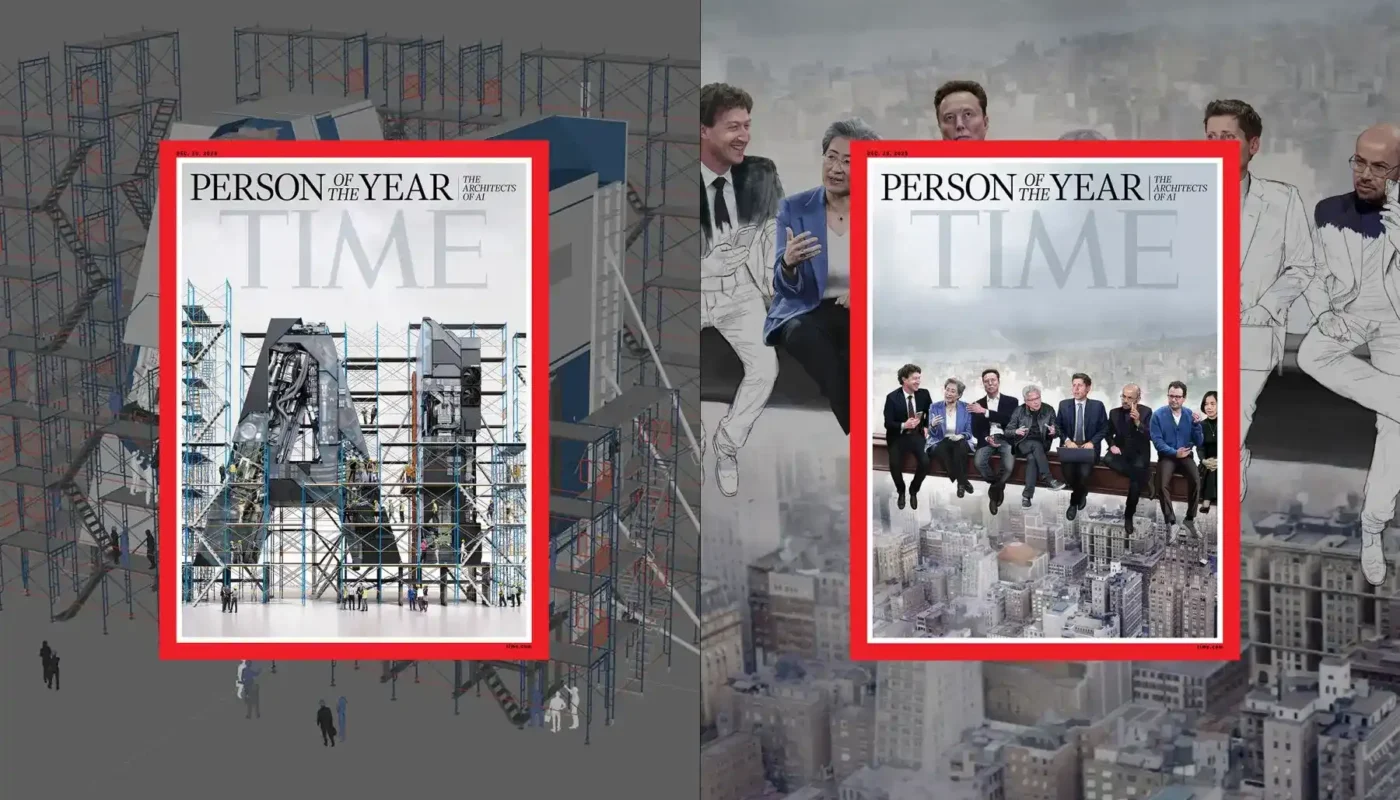
by There is always a lot of speculation in the last few weeks of the year, but the announcement of the TIME Person of the Year 2025 put an end to the debate with a strong, collective nod to the future. TIME Magazine named “The Architects of AI” as its Person of the Year. This choice honors the researchers, engineers, CEOs, and ethicists who all worked together to create a new era of machine intelligence that changed industries and people’s lives in a big way.
For the SEO expert, the choice is easy: no other topic made headlines around the world, disrupted business, or caused more awe and anxiety in 2025 than Artificial Intelligence. This article looks at the reasons behind TIME’s choice, breaks down the geopolitical situation that led to it, and talks about the powerful people who were close to winning the title, which is both coveted and controversial.
The Unwritten Rules of Influence: What Does TIME Want?
To really get what the TIME Person of the Year 2025 is all about, you have to stop thinking of it as an award, a badge of honor, or a popularity contest. It isn’t any of those things. The magazine’s own rules, which have been in place since 1927, say that the winner should be someone who “most affected the news and our lives, for good or bad, and embodied what was important about the year.”
This is an important difference. It’s about making a difference, not getting approval. It was scary to think about how much power Adolf Hitler (1938) and Joseph Stalin (1939 and 1942) had in the past when they were named. This basic logic is what helps you understand why a group or an idea, rather than just a traditional head of state, often gets the title.
The “For Better or For Worse” Rule
The magazine’s editorial stance is perfectly in line with the choice to pick a group of people, or in this case, the Architects’ collective idea behind a technology. It knows that in 2025, no one person or group was in charge of the AI boom.
The active voice is strong here: AI changed the world economy in a big way. Researchers pushed the limits of what was possible. CEOs made billions of dollars while politicians tried to catch up. This chain of influence, which includes both good (medical breakthroughs, higher productivity) and bad (job loss, false information, deepfakes), is a better example of the “for good or ill” mandate than any one person could be.
The Custom of the Non-Human Influence
TIME does not limit its recognition to individuals alone. Choosing “The Computer” in 1982, “The Ebola Fighters” in 2014, and “The Protester” in 2011 showed that they were open to recognizing people or groups that aren’t the norm.
The selection of Architects of AI fits right in with this history. It recognizes that Advanced Generative AI, the system or idea, is the real force of 2025, and the architects are the most important people who channeled this force into the world. It’s a great way to capture the spirit of the time without giving all the credit to one tech leader, who may not always be popular.
The Defining Global Story of 2025: Why AI Rules
To be the TIME Person of the Year in 2025 means to be the person who best represents the year’s most important events. The facts from the world stage in 2025 were clear: America First geopolitics was back, there were still conflicts in the Middle East and Ukraine, and protectionist tariffs were causing a new era of global trade uncertainty. But AI was an undeniable, disruptive force that ran through all of these big events.
From the lab to the living room, the full potential roars.
In 2025, the AI revolution moved from beta testing to full integration that couldn’t be avoided. For example, China’s DeepSeek changed the idea that US-based AI companies were the best by using fewer resources to get the same LLM power and accuracy. This was more than just a big step forward in technology; it was a big change in the economy and the world.
The Architects of AI mark the moment when everyone in the world realized that the age of thinking machines was no longer just a plot point in science fiction, but a real thing that needed immediate government action, economic changes, and philosophical reflection. One search result said that “AI’s full potential roared into view” in 2025 (Mint, December 2025).
The AI Arms Race in Geopolitics
The Architects’ power is directly related to the growing competition around the world. The US and China kept competing strategically, and technology tariffs became a word of the year, causing “massive economic instability” (Corporate Compliance Insights, 2025).
The architects became unintentional players in this high-stakes game by making and releasing models that were more and more powerful. The new AI Act from the EU and the Guiding Principles from the G7 made it necessary for governments to quickly make new rules. It makes sense that the people who made the tools that changed national security and economic power were the most important people of the year.
The People Who Made the “Architects”
Even though the choice was made by a group, some people were clearly the most famous faces of AI in 2025. Their impact was so strong that many prediction markets had them as high-profile candidates on their own.
The Generative Revolution and the Chip King
Jensen Huang, the CEO of Nvidia, became a giant whose impact went beyond the semiconductor business. His company’s chips are the building blocks for advanced AI models. He is in charge of the oil that runs the new digital economy. In the same way, people like Sam Altman of OpenAI and Demis Hassabis of Google DeepMind were in charge of the quick, and sometimes scary, public release of the most advanced generative models.
These people had a kind of hyper-influence that changed not only one industry, but also gave every other industry the tools it needed to change overnight, from finance and compliance to art and journalism.
The Policy Pivot and the Moral Mess
The Architects also include the ethicists, the whistleblowers, and the people who pushed for caution in the rules. They made people all over the world talk about what it means to be human in a time when machines are getting smarter. Regulators were mostly concerned with jobs, fake news in elections caused by deepfakes, and the sheer power of data monopolies. There are two groups of people who have power here: those who built it and those who fought to limit it.
The Closest Runners-Up: The World’s Most Powerful Titans
The quality of the candidates who were not chosen for TIME Person of the Year 2025 also gives the selection its power. The selection committee probably had a lot of people who had a big impact on the year, but in the end, AI was the most important thing.
Donald Trump: The Unusual Power Broker
Donald Trump was still one of the most important people in the world when he started his second term as President of the United States in 2025. His administration’s policy changes, like the introduction of huge tariffs that caused economic instability and the strengthening of his “America First” geopolitical stance, had a direct and immediate effect on the world.
In April 2025, he was named to the TIME 100 Most Influential list, which shows that he is still able to “dominate international political discourse” (Usthadian Academy, 2025). His ongoing impact on trade, alliances, and domestic policy made him almost a sure thing. This shows that only an existential event like AI could beat a US President in a crucial year.
Pope Leo XIV: A New Era of Spiritual Power
After Pope Francis died, Pope Leo XIV became a popular wild card. He was the first American Pope. By definition, a new Pope is a news story that happens all over the world. His choice as the new leader of 1.3 billion Catholics would have represented a new spiritual direction in a world where politics are often unstable. His presence in the conversation shows that TIME is always interested in people who have an impact on the collective conscience of humanity.
The Power of New Political Leaders Working Together
In 2025, there were big changes in politics around the world, which made new national leaders possible candidates. TIME100 included Claudia Sheinbaum from Mexico and Keir Starmer from the UK. These two people are examples of big changes in political power around the world. Their rise shows that power centers around the world are changing and that old political norms are being thrown out. However, their influence was only regional compared to the global, borderless disruption caused by the Architects of AI.
Why This Choice Increases Trust on the Web
The analysis of the TIME Person of the Year 2025 must be based on real data and sound reasoning for a web publication that focuses on high-quality, reliable content. The choice of “The Architects of AI” is based on hard facts: the speed of AI development, the economic disruption it has caused, and the documented policy scramble in response.
This is a choice that everyone had to make in 2025, from Wall Street CEOs to independent content creators. By acknowledging this inescapable, crucial force, TIME solidifies its legacy as a recorder of actual history, rather than merely a commemoration of heroes.
In the end, we see a group of brilliant, often complicated people who gave us the keys to a kingdom we don’t really understand. The Architects were chosen because they didn’t just make the news; they made the machines that make the news itself.
In the end, the TIME Person of the Year 2025 is a strong statement about our shared future. It’s a time to think about how the tools we make and the people who make them can have the biggest impact on our lives. People call them “The Architects of AI” because 2025 was the year the world stopped using a new set of rules and started using a completely new operating system.
I wonder if any of the architects have written a new Large Language Model to help them write their speeches for the gala next year. It seems like the right thing to do.